The Central Florida real estate landscape has evolved into something truly spectacular. We are no longer just a global vacation capital; our region has solidified its status as a premier macroeconomic powerhouse driving historic population growth and massive infrastructure developments. While many buyers focus on urban centers, a significant percentage of incoming residents are looking for specialized, world-class active adult living. If you are aiming for a lifestyle defined by recreation, community connectivity, and golf-cart-accessible convenience, The Villages, Florida stands unmatched as the crown jewel of active adult master-planned communities.
Hi there! I’m Angela Rodriguez, Broker-Owner of Dream Finders Realty Group. Every single day, my team and I help families, professionals, and retirees navigate our local neighborhoods. Whether you are eyeing a luxury estate, a move-in-ready property, or a cozy courtyard villa, purchasing property in our unique region is a monumental financial move. However, buying a home inside The Villages requires a specific, hyper-localized approach that is quite different from buying a traditional residential property.
From understanding Community Development District (CDD) bonds to parsing out deed restrictions and picking the right micro-neighborhood, this comprehensive guide will give you the absolute clarity and confidence you need to make your move to The Villages a seamless success.
1. Understanding the Layout: A Multi-County Phenomenon
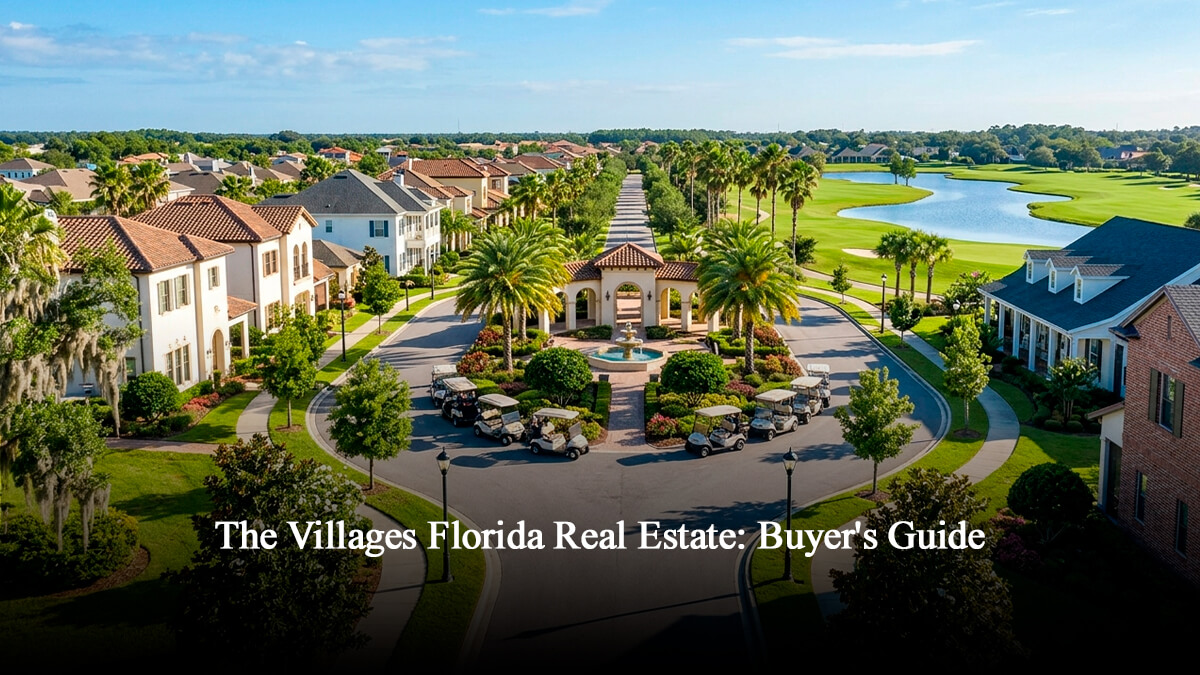
One of the first things that surprises out-of-state buyers is the sheer scale of the community. Spanning across three distinct Central Florida counties—Sumter, Lake, and Marion—The Villages is a massive geographic footprint. It functions essentially as a collection of smaller, highly curated neighborhoods interwoven with championship golf courses, commercial town squares, and thousands of activity centers.
The community is anchored by its legendary town squares, each designed with a unique historic theme:
Spanish Springs Town Square: Located in Lake County, this square features beautiful Spanish-colonial architecture and offers a nostalgic nod to the original phases of the community.
Lake Sumter Landing: Positioned along the water, this square delivers a charming coastal, northeastern seaside village ambiance.
Brownwood Paddock Square: Rooted in early Florida cattle-ranching history, this area presents a rustic, western theme.
Sawgrass Grove: One of the newest lifestyle additions further south, blending indoor-outdoor marketplaces with live entertainment venues.
When you purchase real estate here, you aren’t just choosing a floor plan; you are choosing your proximity to these economic and entertainment hubs. To view maps, lifestyle videos, and current developer timelines, you can explore The Villages official portal.
2. Parsing the 2026 Real Estate Dynamics in Central Florida
To win in today’s market, you have to understand the specific macroeconomic forces shaping it. A common trap many buyers fall into is trying to time the market perfectly. Many individuals believe that waiting out the market for a massive drop in interest rates is the best strategy, but waiting for lower rates can often be a costly error. Because regional demand remains exceptionally high across West Orange and surrounding counties, a slight dip in interest rates instantly triggers an influx of sidelined buyers, driving up competition and home prices overnight.
We are seeing a massive structural shift in what buyers prioritize. High construction labor costs and premium material values mean that affluent buyers are systematically shifting focus. Instead of acquiring distressed assets or older properties that demand immediate remodeling, investors and retirees are intentionally prioritizing move-in-ready luxury properties in Central Florida to completely avoid the logistical stresses of post-closing renovations.
While some buyers compare master-planned options like Winter Garden vs Windermere: Where to Buy in 2026? for family-centric suburban lifestyles, those seeking a dedicated 55+ environment find that the structural layout of The Villages offers unparalleled stability. Sustained population metrics, combined with regional corporate expansions highlighted by the Orlando Economic Partnership, have created a highly competitive ecosystem where localized inventory acts as a powerful hedge against inflation.
3. The Hidden Costs: Bonds, CDDs, and Assessments
When mapping out your real estate budget anywhere in Central Florida, focusing solely on your principal and interest mortgage payment is a critical mistake. A home’s true affordability depends on its complete monthly carrying cost, which includes mortgage, property taxes, insurance, and localized fees. Before you start submitting offers, you must familiarize yourself with the unique financial layers specific to this community:
The Community Development District (CDD) Bond
When the infrastructure of a new phase in The Villages is built (roads, water systems, underground utilities), it is funded via a tax-free municipal bond issued by the CDD. Every home inside that district inherits a portion of that bond.
The Capital Portion: This is the fixed principal amount of the infrastructure cost assigned to the lot. You can pay this off in full at closing, or let it roll into your annual tax bill as a non-ad valorem assessment amortized over 15 to 30 years.
The Maintenance Portion: This is an annual, fluctuating fee that covers the upkeep of the common areas, landscaping, and infrastructure surrounding your specific district.
Amenities Fees
Every homeowner pays a flat monthly amenity fee. This fee grants you unlimited access to the executive golf courses, neighborhood pools, tennis courts, pickleball complexes, and over 3,000 organized social clubs.
Additionally, understanding your home insurance allocations is paramount. When reviewing your overall Florida home insurance 2026 costs and monthly payments, you can substantially lower your monthly carrying costs by ensuring the home has an active wind mitigation report and a four-point inspection certificate.
4. Navigating the 55+ Age Restrictions & Deed Compliance
The Villages is federally qualified under the Housing for Older Persons Act (HOPA) as a 55+ community. This status requires strict adherence to specific demographic guidelines:
The 80/20 Rule: At least 80% of the occupied homes must have at least one resident who is 55 years of age or older.
Underage Residents: No one under the age of 19 is permitted to reside permanently in the community. However, grandchildren and younger family members are always welcome for guest visits, typically capped at 30 days per calendar year.
Furthermore, every neighborhood within the development is governed by specific Deed Restrictions. These rules maintain aesthetic uniformity and protect asset values across the community. They dictate everything from the types of landscaping you can plant to the colors you can paint your home, and even where you can park your golf carts. Working with a dedicated market specialist ensures you read the exact deed compliance documents for your specific target village before signing a contract.
5. The Step-by-Step Acquisition Sequence
Navigating a real estate transaction involves complex, legally binding timelines. Missing a contractual milestone can result in the forfeiture of your deposit or the cancellation of your contract. To ensure your interests remain entirely protected from initial pre-approval to the official closing table, follow this structured acquisition sequence:
Establish Your Financial Baseline: Secure a comprehensive mortgage pre-approval from a reputable local lender. This requires evaluating your debt-to-income (DTI) ratio and determining the specific income needed to buy a house in Orlando or its surrounding areas to comfortably clear underwriting parameters.
Partner with a Local Market Specialist: Align yourself with an expert buyer’s agent who understands hyper-local neighborhood trends, infrastructure shifts, and the intricate difference between MLS-listed homes and proprietary developer inventory.
Conduct Targeted Property Scouting: Begin touring properties with an analytical eye. Look beyond aesthetic staging to evaluate core structural health, lot orientation, age of the mechanical components, and proximity to your preferred town square.
Craft a Structurally Sound Offer: Your agent will draft a formal contract outlining your offered purchase price, financing contingencies, escrow deposit amounts, and explicit inspection timelines.
Navigate the Inspection Period: Hire an independent, state-licensed inspector to complete a comprehensive top-to-bottom property evaluation. This is a critical protection step to uncover hidden mechanical, structural, or roof vulnerabilities before final commitments are made.
Execute Appraisals and Underwriting: The mortgage company will dispatch an independent appraiser to verify the home’s market value matches the contract price. Simultaneously, underwriters review your updated financial documents to issue a clear-to-close status.
Complete the Final Walkthrough and Close: Verify that the property’s condition is unchanged and all agreed-upon repairs are executed perfectly. Sign your formal closing disclosures, wire your remaining cash-to-close funds, and collect your keys.
6. Comprehensive Local Real Estate Q&A
What is the difference between the developer market and the pre-owned MLS market?
This is the single most important distinction when buying here. The Villages developer sells brand-new construction and certain pre-owned homes exclusively through their proprietary sales entity, which is not listed on the standard public Multiple Listing Service (MLS). Conversely, independent real estate brokerages list pre-owned homes directly on the public MLS. To see the entire inventory options available across the region, you must work with an independent broker who can seamlessly integrate both pathways on your behalf.
Do I really need a home inspection if I am buying a brand-new home?
A dangerous misconception repeating itself in our market is that a brand-new home that has passed municipal code inspections doesn’t require an independent home inspection. A municipal code inspection simply ensures the house meets the bare minimum legal standard to be considered habitable. It does not ensure premium craftsmanship, nor does it guarantee that minor subcontractor oversights won’t turn into major structural failures down the road. This is exactly why you need a home inspection for new builds in Central Florida, even when buying directly from the developer. Working with independent inspectors to analyze foundations, rough framing, and final HVAC calibrations ensures you know exactly what you are purchasing before signing the final closing documents.
What are the average closing costs for a home buyer in Central Florida?
On average, buyers should prepare to pay between 2% and 5% of the home’s total purchase price in closing costs. These fees encompass lender underwriting allocations, title insurance policies, government recording fees, appraisal costs, and the pre-payment of your initial property tax and home insurance escrow accounts. I always break down these lines item-by-item in my comprehensive Central Florida Closing Costs Guide 2026 to ensure complete financial transparency.
Is it better to buy or rent first when moving to Central Florida?
If you are completely unfamiliar with the region, a short-term lease can offer a brief window to explore different suburbs. However, if you have a clear understanding of your long-term lifestyle and financial goals, buying immediately is almost always the superior wealth-building move. Renting means paying 100% interest to a landlord while missing out on valuable real estate appreciation and tax advantages. Securing a high-quality property early allows you to begin compounding real-world equity from day one. If you are unsure about committing permanently, consider exploring whether to buy or rent first when moving to Central Florida to weigh your specific financial metrics.
Your Next Steps Toward Homeownership
Purchasing a piece of Central Florida real estate is more than just a transaction; it is a profound step toward building long-term security, lifestyle freedom, and generational wealth. Navigating this fast-paced market requires an experienced advocate who will analyze the data, protect your financial timeline, and negotiate fiercely on your behalf.
For additional independent frameworks on modern consumer protection, loan disclosure requirements, and national lending standards, excellent consumer toolkits are provided directly by federal organizations like the Consumer Financial Protection Bureau (CFPB).
Are you ready to design a customized home-buying strategy tailored specifically to your financial and retirement goals? Let’s connect today to explore the incredible properties waiting for you. You can also review my complete foundational blueprint on How to Buy a Home in Central Florida: 2026 Guide to jumpstart your research.
Angela Rodriguez
Broker-Owner | Dream Finders Realty Group
 (407) 993-1286 / @angela_turealtor