
Hi there! I’m Angela Rodriguez, Broker-Owner of Dream Finders Realty Group. If you’ve been following the Central Florida market lately, you know that 2026 has brought a new wave of energy to our region. Between the massive infrastructure expansions in the Horizon West corridor and the continued growth of the tech and medical sectors in Lake Nona, Orlando remains one of the most desirable places to live in the country.
But with desirability comes a big question I get asked every single day: “Angela, how much do I actually need to make to afford a home here right now?”
Buying a home isn’t just about the price tag; it’s about the math behind the lifestyle. In 2026, “affordability” is shaped by three major forces: home prices, mortgage interest rates, and the unique carrying costs of living in Florida (taxes and insurance). Let’s dive into the data so you can plan your move with total confidence.
The State of the Orlando Market in 2026
As of mid-2026, the median home price in the Orlando metropolitan area has stabilized around $485,000. However, if you are looking at premium suburbs like Winter Garden or Windermere, you should expect those numbers to start closer to $650,000 to $750,000.
Interest rates have finally found a “new normal” after the volatility of previous years, hovering between 6.2% and 6.7% for buyers with strong credit. While we aren’t in the 3% era anymore, the market is much more balanced, offering buyers more room for negotiation than we saw during the post-pandemic frenzy.
The “Golden Rule” of Income and Housing
In the financial world, we often use the 28/36 rule. This means your mortgage payment (including taxes and insurance) shouldn’t exceed 28% of your gross monthly income, and your total debt shouldn’t exceed 36%.
To understand your specific needs, we first have to look at the total monthly cost. Many buyers forget that in Central Florida, your mortgage is only part of the equation. You must also account for buying a home in Central Florida 2026: monthly payment, mortgage, taxes, insurance, and HOA.
Breaking Down the Income Brackets (Estimated for 2026)
To give you a clear picture, let’s look at three common scenarios based on current interest rates (~6.5%) and a 10% down payment.
1. The Entry-Level / Strategic Investment ($425,000)
Monthly Payment (PITI + HOA): Approx. $3,400 – $3,600.
Required Annual Income: Approximately $145,000 – $155,000.
Ideal for: First-time buyers or those looking for townhomes in rising areas. If you’re debating the math on this, check out my analysis on Winter Garden cash flow: Single-Family vs. Townhomes in 2026.
2. The Move-Up Family Home in Winter Garden ($650,000)
Monthly Payment (PITI + HOA): Approx. $5,100 – $5,400.
Required Annual Income: Approximately $215,000 – $230,000.
Ideal for: Families wanting to be near top-rated schools and the vibrant lifestyle of Downtown Winter Garden. Before committing, it’s wise to review the cost of living in Winter Garden 2026 to ensure your lifestyle matches your budget.
3. The Luxury Residence in Windermere or Lake Nona ($1,000,000+)
Monthly Payment (PITI + HOA): $7,800+.
Required Annual Income: $330,000+.
Ideal for: High-net-worth individuals seeking move-in ready luxury properties in Central Florida.
Why Your “Income” Needs a Safety Net in Florida
In 2026, having the “salary” to cover the mortgage isn’t enough. You need to account for two “Florida Factors” that can change your monthly payment significantly:
1. Homeowners Insurance
The insurance market in Florida has undergone significant legislative changes. While things are more stable in 2026 than they were a few years ago, premiums are still a major line item. I always recommend my clients read my guide on Florida home insurance 2026: cost and monthly payment to avoid surprises.
2. Closing Costs
You need cash on hand. Beyond your down payment, closing costs in Central Florida typically range from 3% to 6% of the purchase price. For a $500,000 home, that’s an extra $15,000 to $30,000. I’ve desitilled everything you need to know in my Central Florida Closing Costs Guide 2026.
Strategies to Lower Your Required Income
If the numbers above seem high, don’t worry. There are several ways we can make the math work for you:
Higher Down Payment: Putting 20% down eliminates Private Mortgage Insurance (PMI) and lowers your monthly obligation.
Seller Credits: In the current 2026 market, we are successfully negotiating credits where sellers help cover your closing costs or “buy down” your interest rate.
Buy vs. Rent Analysis: Sometimes, it makes more sense to wait six months and save, while other times, the appreciation of Orlando real estate means waiting will cost you more in the long run. See my deep dive on moving to Central Florida 2026: should you buy or rent first?.
Community Spotlight: Where Your Dollar Goes Further
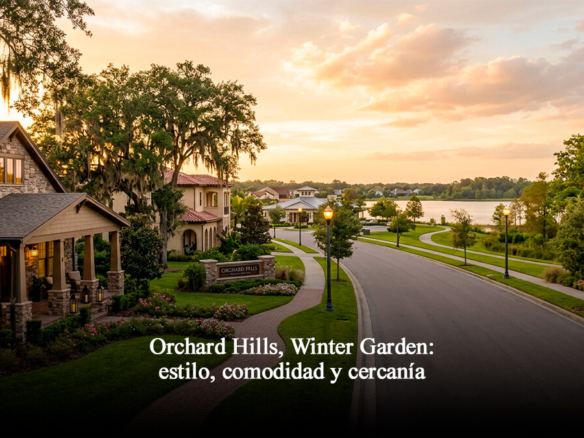
If you are looking for the best “bang for your buck” in 2026, I am steering my clients toward the communities of Winter Garden. The infrastructure is established, the property values are resilient, and the quality of life is unmatched.
For the most up-to-date regional data on what has recently sold (which dictates the appraisal value of your future home), I always recommend checking the Stellar MLS data through a licensed professional.
Questions & Answers (FAQ)
What is the median household income in Orlando for 2026?
While official census data lags, local economic reports suggest the median household income in the Orlando-Kissimmee-Sanford MSA has risen to approximately $78,000. However, to buy a median-priced home, a household typically needs an income significantly higher than the city median, often requiring dual-income or high-sector professional salaries.
Is 2026 a good time to buy a house in Florida?
Yes, for those looking for stability. 2026 has seen a shift from a “seller’s market” to a “balanced market.” Inventory levels have increased, giving buyers more choices and more power to request repairs or closing cost contributions.
How much are property taxes in Orlando in 2026?
Generally, you should budget between 1.1% and 1.5% of the property’s assessed value. Remember that Florida’s Save Our Homes cap protects primary residents from drastic tax increases, but when you buy a new home, the taxes will “reset” to the current market value. You can find more details at Florida Realtors.
Can I buy a house in Orlando with a 3.5% down payment?
Absolutely. FHA loans remain a popular choice in 2026 for those with an income that supports the monthly payment but who prefer to keep more cash in the bank. Keep in mind this will increase your required monthly income since the loan amount will be higher.
Conclusion
Buying a home in Orlando in 2026 requires a sharp eye and a solid financial plan. As your Realtor, my job is to make sure you aren’t just “buying a house,” but making a sound investment for your future.
If you’re ready to see what your specific numbers look like, let’s connect. We can run a custom “Affordability Analysis” based on current Consumer Financial Protection Bureau (CFPB) guidelines and local market realities.
Ready to start your journey? Let’s talk today!
Angela Rodriguez
Broker-Owner | Dream Finders Realty Group
(407) 993-1286 / @angela_turealtor
Disclaimer: The financial figures provided are estimates based on market trends as of May 2026. Interest rates, insurance premiums, and home prices are subject to change based on economic conditions and individual credit profiles.