
Hi there! I’m Angela Rodriguez, Broker-Owner of Dream Finders Realty Group. If you’ve been keeping a close eye on the Central Florida real estate market lately, you already know that our region is experiencing an incredible era of growth. From the high-tech corridors of NeoCity in St. Cloud to the beautifully master-planned lifestyle villages of Horizon West, buyers from all over the country are looking to plant roots here.
However, navigating the financial realities of today’s housing market means you have to be sharper than ever. One of the most frequent questions I receive in my office right now is: “Angela, interest rates have stabilized in the low-to-mid 6% range, but how can I lower my initial monthly payment without sacrificing my purchasing power?”
My answer is almost always the same: You need to look into a mortgage rate buydown. In our current balanced market, the “cost of waiting” for macroeconomic shifts can easily cause you to miss out on prime equity growth. Instead of trying to time the market perfectly, savvy buyers are using structural financing strategies to make their dream homes immediately affordable. Let’s dive deep into exactly what a mortgage rate buydown is, how it works, and why it has become the ultimate negotiation tool across Orlando and its premier suburbs.
Defining the Mortgage Rate Buydown
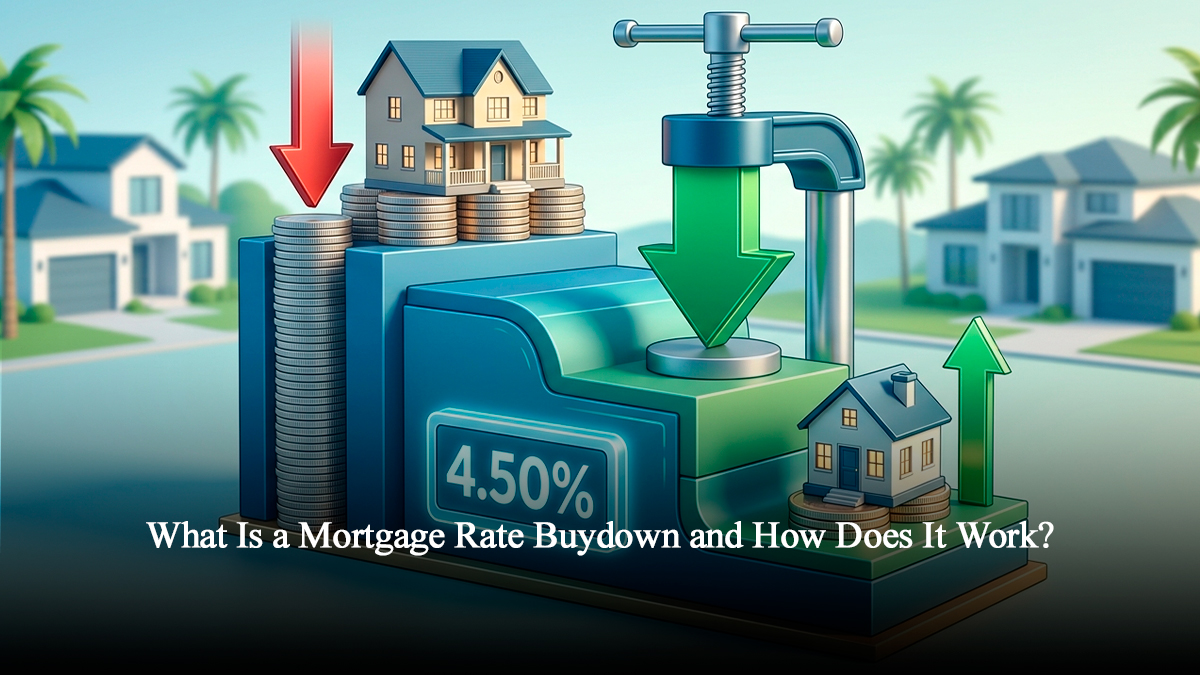
At its core, a mortgage rate buydown is a financing arrangement where a party pays an upfront fee at closing to temporarily or permanently lower the interest rate on a home loan. This upfront payment is often referred to as “buying down the rate.”
The money required for a buydown can come from the homebuyer, the builder, or the seller as a concession. In today’s landscape, we are seeing incredible success negotiating these as seller credits, allowing buyers to keep their hard-earned cash in the bank while enjoying lower monthly obligations.
To accurately map out your home buying budget, you first need to understand the relationship between interest rates and your overall income needed to buy a house in Orlando in 2026. When your initial interest rate drops, the income threshold required by lenders to satisfy debt-to-income (DTI) ratios becomes much more accessible.
How Does a Permanent Buydown Work?
There are two primary flavors of rate buydowns: permanent and temporary.
A permanent buydown is straightforward. You or the seller pays upfront fee points (known as discount points) directly to the lender at closing. Each point typically costs 1% of the total loan amount and reduces your interest rate by a specific percentage—usually around 0.25%—for the entire 30-year life of the loan.
This is a fantastic strategy if you intend to stay in your home for a long time because it offers predictable, long-term savings. However, you must factor this upfront cost into your closing liquidity. If you’re planning your transaction out, I highly recommend reviewing my comprehensive Central Florida Closing Costs Guide to ensure you are accounting for all lender fees, title costs, and prepaid items without any surprises.
How Does a Temporary Buydown Work? (The 2-1 Buydown Model)
A temporary buydown is where things get highly strategic. Instead of lowering the rate for 30 years, a temporary buydown reduces your interest rate significantly during the first few years of your homeownership. The most popular version in Central Florida right now is the 2-1 buydown.
Here is exactly how a 2-1 temporary buydown breaks down if your base note rate is 6.5%:
Year 1: Your interest rate is bought down by 2%, meaning you only pay a 4.5% interest rate.
Year 2: Your interest rate is bought down by 1%, meaning your effective rate is 5.5%.
Years 3-30: The buydown period ends, and your rate returns to the original note rate of 6.5% for the remainder of the loan term.
Lenders also offer 3-2-1 buydowns (which step down over three years) or 1-0 buydowns (a one-year reduction). The upfront cost of a temporary buydown is equal to the exact dollar amount of interest saved during those introductory years. This total sum is held in an escrow account by the lender and drawn out each month to supplement your lower monthly payment.
The Real-World Math: A Central Florida Example
Let’s look at a concrete example to see how much money this actually saves you. Suppose you are purchasing a beautiful townhome or single-family property in one of our high-performing corridors for $500,000, putting 10% down ($50,000), leaving a loan balance of $450,000.
With a standard 30-year fixed mortgage at a 6.5% interest rate, your principal and interest (P&I) payment would be roughly $2,844 per month.
If we negotiate a 2-1 seller-paid buydown, your payments look like this:
Year 1 (At 4.5%): Your P&I payment drops to $2,280 per month. That is a savings of $564 every single month, totaling $6,768 in your first year!
Year 2 (At 5.5%): Your P&I payment is $2,555 per month. You are still saving $289 per month, totaling $3,468 for the year.
Year 3 onwards (At 6.5%): Your payment returns to the standard $2,844.
Over the first two years of owning your Central Florida home, you have saved $10,236 in interest payments. That is cash you can immediately reallocate toward furnishing your new space, setting up a rainy-day fund, or offsetting other local carrying costs.
Why Buydowns are a Critical 2026 Real Estate Strategy
The Central Florida market has shifted beautifully into a balanced ecosystem. While demand remains consistently strong due to corporate expansions, inventory levels allow for meaningful negotiations. Instead of aggressively slashing the purchase price of a home—which can negatively impact appraisal values across a neighborhood—sellers are highly motivated to offer seller credits to buy down your rate.
When assessing homes, remember that your interest rate is only one piece of your financial blueprint. You must always calculate your total monthly payment including taxes and insurance. Because Florida’s homeowners insurance landscape requires meticulous budgeting, keeping your initial mortgage payments low via a buydown provides an excellent financial buffer.
Make sure you remain well-versed in current Florida home insurance costs so you can balance your temporary buydown savings against your localized carrying charges seamlessly.
Matching Financing with the Right Location
If you are currently debating whether to buy or rent first when moving to Central Florida, analyzing a rate buydown might completely change your perspective. Renting often feels like a safe holding pattern, but it prevents you from building long-term equity in booming suburban corridors.
For instance, if you look closely at the vibrant communities of Winter Garden, you’ll find property values are incredibly resilient. Utilizing a seller-paid rate buydown on a home in Winter Garden or Lake Nona allows you to lock in today’s purchase price—protecting yourself from future price appreciation—while enjoying a highly comfortable, reduced payment structure for your first 12 to 24 months. To understand where property values are heading over the next few years, keeping track of the latest regional data and 202real estate growth and equity trends is vital for long-term wealth building.
Q&A Section
Who pays for a mortgage rate buydown?
A mortgage rate buydown can be paid for by the homebuyer, the home builder, or the property seller. In a balanced or buyer-favorable real estate market, it is most commonly structured as a seller concession, where the seller contributes a lump sum at closing to buy down the buyer’s interest rate as an incentive to close the deal.
Is a temporary mortgage rate buydown worth it?
Yes, a temporary mortgage rate buydown is highly worth it, especially if funded via seller credits. It provides substantial financial relief during your first few years of homeownership, allowing you to ease into your mortgage. It is also an excellent strategy if you anticipate your household income rising or if you plan to refinance when overall market rates decline.
What happens to a temporary buydown if I refinance early?
If you choose to refinance your home loan before the temporary buydown period ends, any remaining, unspent funds sitting in your lender’s buydown escrow account are not lost. According to strict guidelines regulated by the Consumer Financial Protection Bureau, those remaining escrow funds are typically applied directly to your principal loan balance, reducing the amount you owe on your original mortgage.
Can I use a rate buydown on FHA or VA loans?
Absolutely. Rate buydowns are fully permissible on conventional, FHA, and VA home loans. However, government-backed loans like FHA and VA have strict limits regarding maximum seller concessions (typically capped at 4% of the purchase price for VA and 6% for FHA). It is always wise to consult local sales data via the Stellar MLS and work alongside an experienced broker to structure these offers within legal parameters.
Conclusion: Let’s Build Your Real Estate Strategy Together
Ultimately, a mortgage rate buydown is an empowering financial mechanism that proves you don’t have to let interest rates dictate your ability to own real estate. By strategically structure your financing, you can secure a slice of the incredible Central Florida market with total confidence.
As your trusted local Realtor and neighbor, my mission is to help you decode market data and design a customized financial blueprint that works for your family’s unique goals. For deeper insights into our regional economic updates, I always encourage following trusted entities like Florida Realtors to stay updated on systemic market health.
Are you ready to see what your specific numbers look like on a Central Florida home? Let’s connect today, run a customized affordability analysis, and find the perfect property that fits your lifestyle and performs as a stellar asset!
Angela Rodriguez
Broker-Owner | Dream Finders Realty Group
 (407) 993-1286 / @angela_turealtor