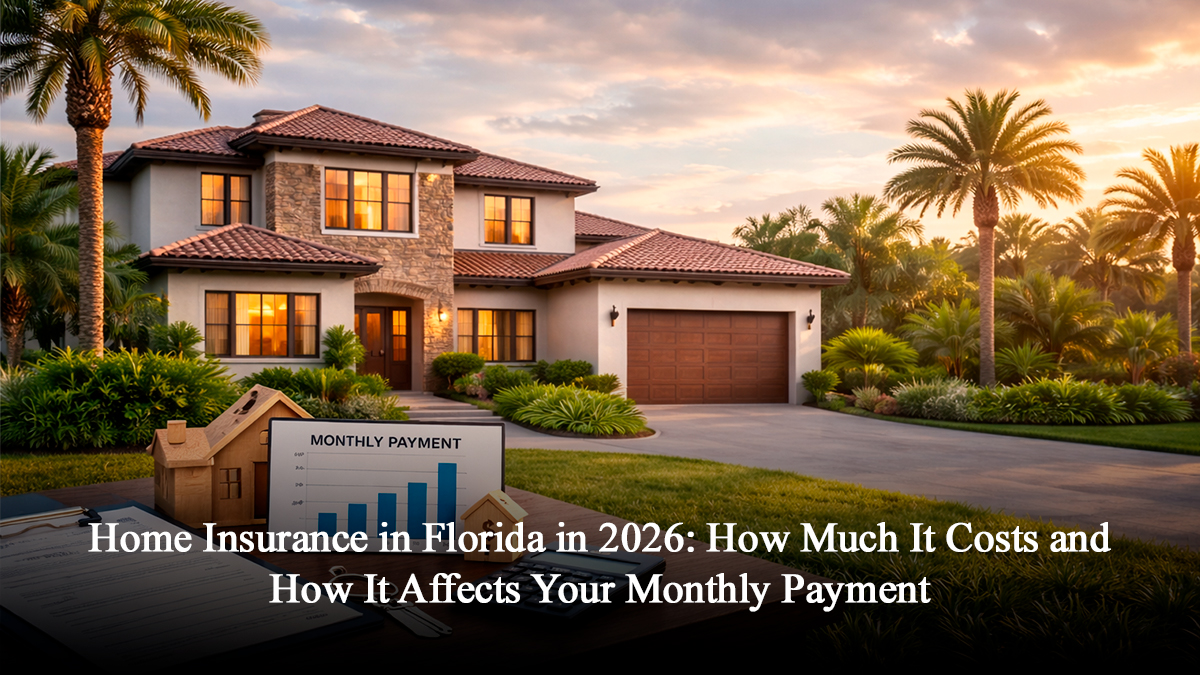
When I work with buyers relocating to Central Florida, one of the biggest surprises is how much homeowners insurance can affect the real monthly payment. In Florida, this is not a small line item. It can materially change affordability from one county to another, even when the purchase price stays the same. The good news is that Florida’s property insurance market has shown signs of stabilization: the Florida Office of Insurance Regulation said homeowners insurance costs fell 0.9% in the fourth quarter of 2024, and since January 2024, 27 companies filed for rate decreases while 41 requested no change. OIR also announced in January 2026 that the vast majority of Citizens policyholders statewide would receive a premium decrease, with a statewide average reduction of 8.7%, although that does not mean every home or every carrier will price the same.
So what does home insurance look like in Central Florida right now? According to the latest OIR Property Insurance Stability Report, which uses county-level data reported as of September 30, 2025, the average annual homeowners premium including wind coverage was about $3,585 in Orange County, $3,527 in Seminole County, $2,911 in Osceola County, $2,642 in Lake County, and $2,771 in Polk County. Broken down monthly, that is roughly $299, $294, $243, $220, and $231 per month just for homeowners insurance. OIR also notes that actual premium will vary based on the insurance company, insured value, deductibles, and policy terms.
That monthly difference matters more than many buyers expect. If your lender escrows insurance, your annual premium is divided by 12 and added to your mortgage payment. Using Freddie Mac’s average 30-year fixed mortgage rate of 6.22% as of March 19, 2026 as a simple illustration, a $500,000 home with 10% down would have principal and interest of about $2,762 per month. Add average homeowners insurance, and you are at roughly $3,061 per month before taxes and HOA in Orange County, versus about $2,982 before taxes and HOA in Lake County. That is about a $79 monthly difference from insurance alone, without changing the home price.
Why does one home cost more to insure than another? First, coverage amount matters. Your insurance should reflect the cost to rebuild the home, not simply the purchase price or taxable value. Second, underwriting matters. Florida consumer guidance notes that insurers commonly look at factors such as the age of the home, construction type, roof age, and even materials used in plumbing and electrical wiring. Third, deductible structure matters. In Florida, carriers must offer hurricane deductible options of $500, 2%, 5%, or 10% of dwelling limits in most cases. A lower premium can come with a higher out-of-pocket cost after a storm, so buyers need to look at both the monthly number and the risk they are retaining.
Another key point many out-of-state buyers miss is flood insurance. Standard homeowners insurance does not cover flood damage. If flood coverage is needed, it is usually purchased as a separate policy. Florida’s consumer guidance also notes that while flood insurance is not automatically required by state law for every homeowner, a lender may require it if the property is in a higher-risk flood area. That is why I always tell my buyers to review the homeowners quote and the flood-zone situation together, not separately.
Can buyers lower the cost? Sometimes, yes. Florida requires insurers to offer discounts for hurricane-loss mitigation, and those discounts apply to the windstorm portion of the policy. Features such as stronger roof-to-wall connections, opening protection, and other wind-mitigation improvements can make a real difference. On top of that, the My Safe Florida Home program says it provides free wind-mitigation inspections and grant assistance for eligible homeowners who want to strengthen their homes and potentially reduce insurance costs.
One more thing I think buyers should understand in 2026: most Florida homeowner policies are still in the private, voluntary market, not Citizens. OIR’s latest report shows that as of September 30, 2025, 91.19% of homeowner policies were in the voluntary market and 8.81% were with Citizens. That means shopping matters. Comparing carriers, deductibles, exclusions, and endorsements can be just as important as comparing the premium itself.
My advice is simple: before you fall in love with a house in Orlando, Winter Garden, Windermere, Lake Nona, Clermont, Kissimmee, Celebration, or Davenport, ask for the real monthly payment. That means principal, interest, taxes, homeowners insurance, flood insurance if needed, and HOA or CDD if applicable, especially if you are deciding whether the property will be your primary residence, second home, or investment and whether benefits like Florida Homestead Exemption may apply. That is how I help buyers make smart decisions in Central Florida. If you are planning a move in 2026, I can help you compare communities, estimate your true monthly costs, and avoid expensive surprises before you make an offer.