TLDR Summary:
• Pre-construction can be a smart strategy—but the contract terms often matter more than the floor plan.
• The biggest risks include delays, deposit exposure, material changes, HOA/COA fee surprises, and financing/appraisal gaps.
• Your exit strategy (rent, resell, short-term rental, or hold) should be confirmed **before** you sign.
• The best protection is simple: vet the builder, review documents early, and plan for multiple scenarios.
—
Florida continues to attract buyers from across the U.S. and abroad—especially investors looking for newer homes, energy-efficient builds, and modern communities. As a realtor with Dream Finders Realty Group based in Winter Garden, I’ve helped many clients evaluate pre-construction opportunities across Central Florida and beyond.
But here’s the truth: pre-construction isn’t “low risk” just because the home is new. The risks are different—and they’re often hidden in timelines, documents, and contract clauses.
Let’s break down what you should watch for before you invest.
What Does “Pre-Construction” Mean in Florida Real Estate?
A pre-construction purchase usually means you’re buying a property that is not completed yet—often:
• New construction single-family homes or townhomes
You reserve a lot, choose upgrades, and close once the home is finished.
• Pre-construction condominiums
You sign a purchase agreement, place deposits, and close once the building is delivered and approved for occupancy.
Both can be great investment plays—but the risk profile is not the same.
Why Do Investors Like Pre-Construction in Florida?
Investors often choose pre-construction because it can offer:
• A “new home” product that attracts tenants or buyers
• Predictable maintenance in the early years
• The chance to lock pricing early (depending on the market cycle)
• Strong community amenities (especially in master-planned developments)
That said, those benefits only work when the numbers and the contract align.
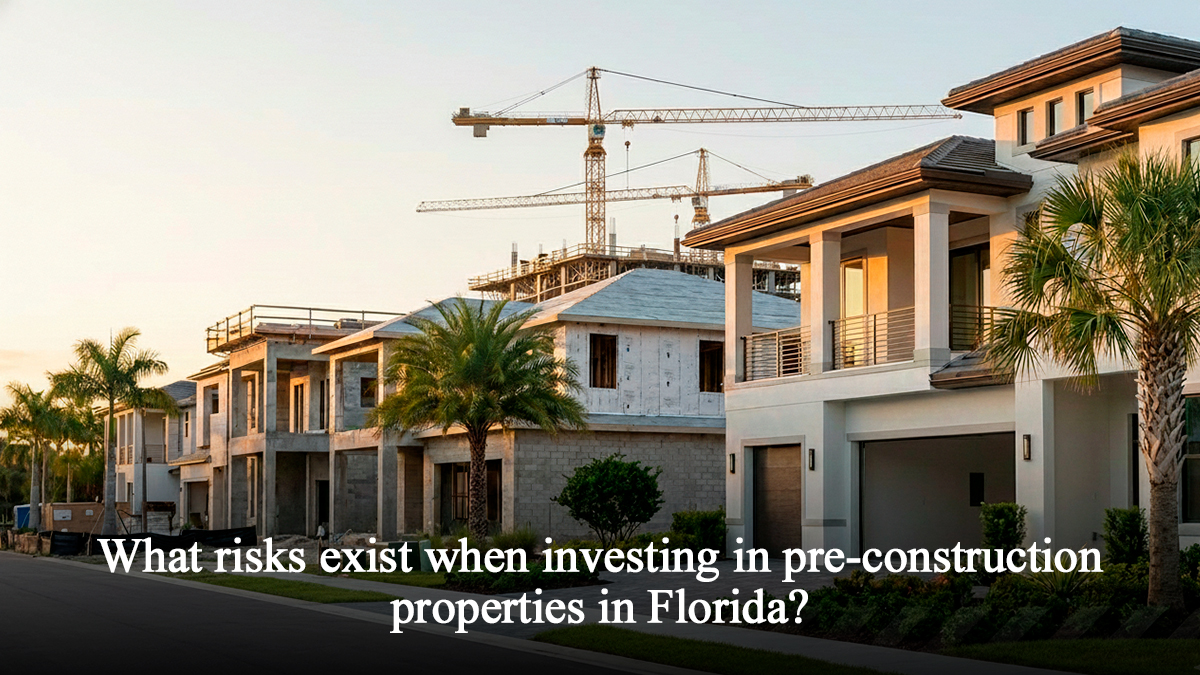
What Are the Biggest Risks of Investing in Florida Pre-Construction?
1) Construction Delays (and Real-Life Carrying Costs)
Delays happen—permitting, inspections, labor availability, weather, supply chain, and change orders.
Risk: Your plan to rent or resell by a certain date can fall apart, and you may carry costs longer than expected.
What to do: Ask what timelines are realistic, how delays are handled in the contract, and what flexibility you need financially.
2) Deposits and How “Protected” They Really Are
Many buyers assume a deposit is always safe. In reality, deposit handling depends on what you’re buying and the contract structure.
Risk: Tying up significant cash for long periods—or misunderstanding how deposits are held and when they may be used.
What to do: Confirm where deposits are held, who the escrow agent is, and under what conditions funds may move.
3) Contract Clauses That Favor the Developer/Builder
Pre-construction contracts are typically builder-written. That means:
• deadlines may favor the builder
• change rights may be broad
• cancellation terms may be strict
• dispute resolution may limit your options
Risk: Signing a contract you can’t realistically exit without penalties.
What to do: Treat the contract as a financial instrument—review it carefully (ideally with a Florida real estate attorney).
4) Material Changes to the Property or Community
Developers may adjust:
• layouts, finishes, appliances
• common areas and amenities
• parking, views, or unit features
• community rules or rental policies
Risk: The property you thought you were buying is not the same product at delivery.
What to do: Get clarity on what changes are allowed, what triggers buyer rights, and what must be disclosed.
5) HOA/COA Fees, Special Assessments, and Operating Costs
New communities often start with projected budgets. Over time, real costs show up:
• higher insurance premiums
• reserves and maintenance costs
• staffing/security expenses
• landscaping and amenities upkeep
Risk: Your monthly carrying cost becomes much higher than your original numbers.
What to do: Request budgets, review fee schedules, understand reserve planning, and run your investment math with buffers.
6) Financing Risk: Rates, Lending Rules, and Appraisal Gaps
A lot can change between signing and closing:
• interest rates move
• lender guidelines shift
• your financial profile changes
• the appraisal comes in below your contract price
Risk: You have to bring more cash to close—or you lose the deal and risk penalties.
What to do: Stay in touch with a lender early, keep liquidity, and understand your contract’s financing provisions.
7) Exit Strategy Risk (Resale, Long-Term Rent, or Short-Term Rental)
Your strategy must match the property and the rules:
• some communities restrict rentals
• short-term rentals may be prohibited
• condo rules can change
• local enforcement can tighten
Risk: You buy thinking “I’ll Airbnb it,” then discover you can’t—or that the numbers don’t work.
What to do: Confirm rental rules in writing and build an exit plan with at least two viable options.
How Can You Reduce Risk Before You Sign?
Here’s the checklist I use with investors:
• Vet the builder/developer
Look at past projects, delivery timelines, reputation, and after-closing service.
• Review documents early
Don’t wait until the last minute—especially for condos and association rules.
• Stress-test your numbers
Run scenarios for:
– higher HOA/COA fees
– higher insurance costs
– delays of 3–9+ months
– appraisal below contract price
– rent lower than expected
• Choose a strategy-first property
Start with your investment goal (cash flow, appreciation, lifestyle, relocation plan), then match the right community and product.
What Are the Pros and Cons of Pre-Construction Investing in Florida?
Pros
• New inventory with modern features and strong tenant/buyer appeal
• Often lower repairs in the early years
• Strong amenities in master-planned communities
• Potential upside if the market grows during construction
Cons
• Timelines can shift (delays are common)
• Deposits can be tied up for long periods
• Contracts often favor the builder
• Costs at delivery (fees, insurance, taxes) may differ from projections
• Exit strategy can be restricted by HOA/COA rules
FAQs
1. Is pre-construction riskier than buying a resale home?
Not always—just different. With resale, you evaluate the property today. With pre-construction, you’re evaluating a future delivery, a contract, and a developer’s performance.
2. Are deposits refundable in Florida pre-construction deals?
It depends on the property type and the contract terms. Always confirm cancellation conditions and deposit handling before signing.
3. What happens if the home is delayed?
Most contracts provide the builder with flexibility. Your best defense is budgeting for delays and understanding the contract’s timeline clauses.
4. Can I finance at closing even if I plan to pay cash later (or vice versa)?
Possibly, but you need to plan ahead. Financing rules and rates may change before closing, so align with a lender early and keep options open.
5. How do I know if I can rent it out (long-term or short-term)?
You must confirm HOA/COA rental policies and any local rules that apply. Never assume—verify before you buy.
Conclusion
Pre-construction in Florida can be an excellent investment—when you treat it like a strategy, not a showroom decision.
If you’d like, I can help you:
• compare pre-construction vs resale opportunities
• evaluate builder reputation and community rules
• run conservative numbers (best case / base case / worst case)
• confirm rental strategy and exit options before you commit
Reach out to Angela Rodriguez at Dream Finders Realty Group for guidance tailored to your goals in Central Florida and beyond.