
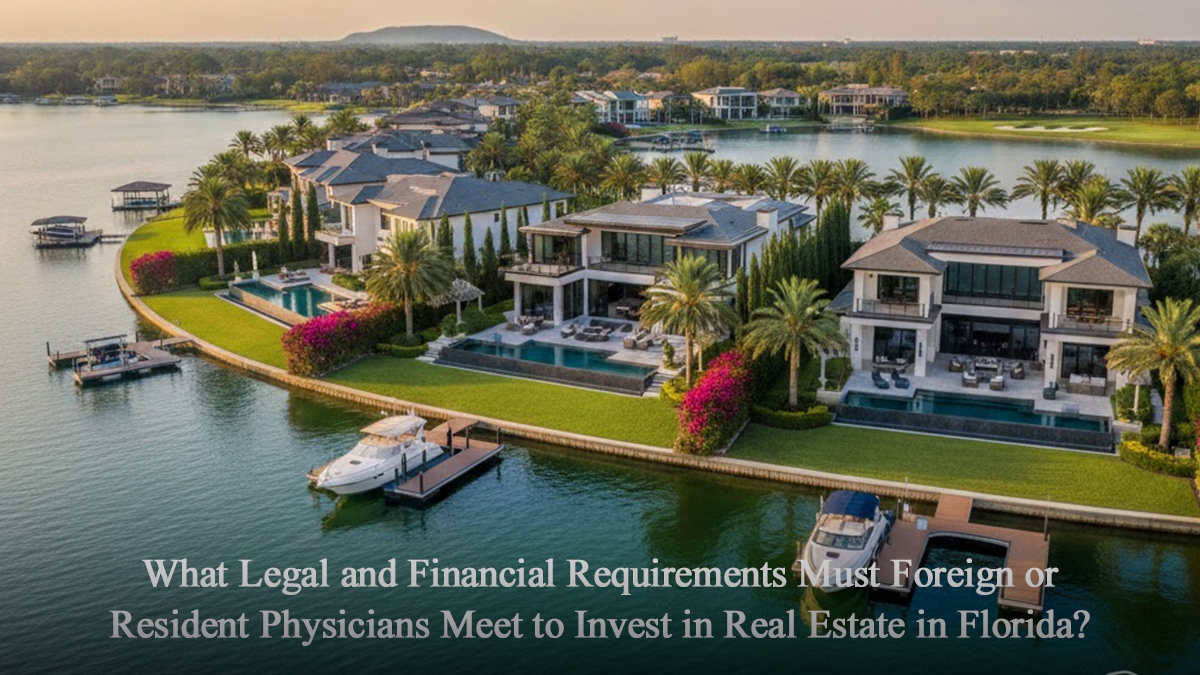
Investing in real estate is an exciting venture, yet it comes with its own set of rules and regulations, especially for foreign or resident physicians aiming to make a mark in the Florida property market. Here in Winter Garden, Florida, Dream Finders Realty Group, led by me, Angela Rodriguez, is committed to guiding you through this journey. From understanding the legal landscape to navigating financial obligations, this blog post will provide a comprehensive overview of the requirements and opportunities for physicians eager to invest in Central Florida real estate, including the appealing lakefront homes that promise long-term growth.
TLDR Summary:
• Foreign and resident physicians face unique legal and financial requirements when investing in Florida real estate.
• Understanding visa types and tax implications is crucial for foreign investors.
• Financing options differ for foreign nationals and residents.
• Local market insights can guide investment strategies for neighborhoods like Hunters Creek and Dr. Phillips.
• Professional guidance can simplify the process and maximize investment potential.
What Legal Considerations Should Foreign Physicians Be Aware Of?
Visa and Immigration Requirements
For foreign physicians, understanding visa requirements is crucial. The EB-5 Visa is a popular choice, allowing for residency through significant investment. However, this visa requires investing at least $800,000 in a targeted employment area, a threshold that may not directly apply to real estate unless part of a larger development.
Another option is the E-2 Visa, suitable for those from treaty countries. This visa requires a substantial investment in a U.S. business, and while real estate qualifies, it often requires active management.
Pros:
• Pathway to Residency: Certain visas provide a pathway to permanent residency.
• Investment Diversification: Real estate investments can diversify financial portfolios.
Cons:
• Complex Application Process: Visa applications can be intricate and time-consuming.
• Ongoing Compliance: Visa holders must comply with specific investment requirements.
One of my clients from Europe found the EB-5 Visa a viable path but was initially daunted by the process. Through collaboration with immigration attorneys and strategic planning, we navigated the application successfully, allowing them to invest in a lakefront home in the desirable Windermere neighborhood.
Legal Documentation and Compliance
Foreign investors must adhere to the Foreign Investment in Real Property Tax Act (FIRPTA), imposing tax on the sale of U.S. real estate by non-U.S. citizens. It’s essential to work with a knowledgeable tax advisor to understand the implications fully.
Moreover, having the right legal documents, such as a Foreign National Loan Agreement, is critical. This document outlines the terms of financing and ensures compliance with U.S. lending standards.
Local Market Insights
Understanding local market dynamics is vital. In 2025, neighborhoods like Dr. Phillips have shown a 5% increase in property values, reflecting a robust market for investment. Meanwhile, areas like Hunters Creek offer excellent opportunities for those interested in long-term growth.
How Do Financing Options Differ for Foreign and Resident Physicians?
Financing for Foreign Investors
Foreign investors face unique challenges in securing financing. Many U.S. banks offer specific foreign national loan programs, typically requiring a 30-40% down payment, higher than the average for U.S. residents.
Pros:
• Potential for High ROI: Investing in Central Florida’s flourishing market can yield high returns.
• Diversification: U.S. real estate can provide portfolio diversification.
Cons:
• Higher Down Payments: Foreign investors often face higher down payment requirements.
• Exchange Rate Risks: Currency fluctuations can impact investment costs and returns.
Financing for Resident Physicians
Resident physicians have access to more traditional financing options, such as conventional loans, FHA loans, and physician-specific loan programs offering competitive interest rates and lower down payments.
Pros:
• Lower Barriers to Entry: Easier access to financing with favorable terms.
• Increased Leverage: Lower down payments allow for greater leverage.
Cons:
• Debt-to-Income Ratio Considerations: Physicians with significant student loans may face challenges with loan approval.
• Market Competition: Competitive real estate market conditions can pose challenges.
What Are the Tax Implications for Physician Investors?
Understanding Tax Obligations
For both foreign and resident investors, understanding tax obligations is crucial. Foreign investors are subject to FIRPTA withholding, while resident physicians must navigate property taxes and income tax implications.
Tax Benefits for Investors
Investing in real estate offers several tax benefits, such as depreciation, mortgage interest deductions, and capital gains tax exclusions. These benefits can significantly enhance the financial viability of real estate investments.
One of my clients, a resident physician, successfully leveraged these tax benefits to purchase multiple properties in the affluent neighborhood of Winter Park, experiencing substantial appreciation over time.
Local Market Data
In 2025, Winter Garden and surrounding areas like Ocoee and Windermere have seen stable property tax rates, making them attractive for investment. The consistent growth in property values offers additional incentives for investors seeking long-term growth.
How Can Physicians Maximize Their Real Estate Investments?
Strategic Neighborhood Selection
Choosing the right neighborhood is key. Areas like Lake Nona, known for its medical city, offer unique opportunities for physicians looking to invest near healthcare hubs. The proximity to medical facilities can increase rental demand, providing a steady income stream.
Leveraging Professional Guidance
Working with experienced real estate professionals, like those at Dream Finders Realty Group, can provide invaluable insights. We offer detailed market analysis, negotiation expertise, and strategic planning to help physicians maximize their investments.
Building a Diverse Portfolio
Diversifying your real estate portfolio can mitigate risks and enhance returns. Consider investing in various property types, such as residential, commercial, and vacation rentals, to spread risk and capitalize on different market segments.
What Are the Pros and Cons of Investing in Florida Real Estate?
Pros
• Strong Market Growth: Florida’s real estate market continues to show robust growth, with neighborhoods like Winter Garden experiencing a 6% increase in property values in 2025.
• Favorable Tax Climate: Florida’s lack of state income tax enhances the financial attractiveness of property investments.
• Diverse Investment Opportunities: From lakefront homes to urban condos, Florida offers diverse investment options.
Cons
• Market Volatility: While growth is strong, the market can experience fluctuations, affecting property values.
• Insurance Costs: Florida’s climate necessitates higher insurance premiums, impacting overall investment costs.
One of my clients, a foreign physician, invested in a lakefront home in the upscale community of Isleworth. Despite initial concerns about insurance costs, the property’s appreciation and rental income potential outweighed these challenges, resulting in a rewarding investment.
FAQs
1. Can foreign physicians buy property in Florida?
Yes, foreign physicians can purchase property in Florida, but they must adhere to specific legal and financial requirements, including understanding visa implications and FIRPTA regulations.
2. What financing options are available for foreign investors?
Foreign investors can access specialized loan programs requiring higher down payments. Consulting with financial institutions that offer foreign national loans is advisable.
3. Are there tax benefits for physician investors?
Yes, real estate investments come with various tax benefits, such as depreciation and mortgage interest deductions. Consulting with a tax advisor is recommended to maximize these benefits.
4. How do I choose the right neighborhood to invest in?
Consider factors like proximity to healthcare facilities, local market trends, and potential for long-term growth. Areas like Lake Nona and Windermere offer unique opportunities for physician investors.
5. Is it better to invest in residential or commercial properties?
Both have their advantages. Residential properties often provide steady rental income, while commercial properties can offer higher returns. Diversifying your portfolio can balance these benefits.
In conclusion, whether you’re a foreign or resident physician, investing in Florida real estate offers exciting opportunities and challenges. By understanding legal and financial requirements, leveraging professional guidance, and selecting strategic investments, you can achieve significant long-term growth. At Dream Finders Realty Group, we’re here to help you navigate this journey.