
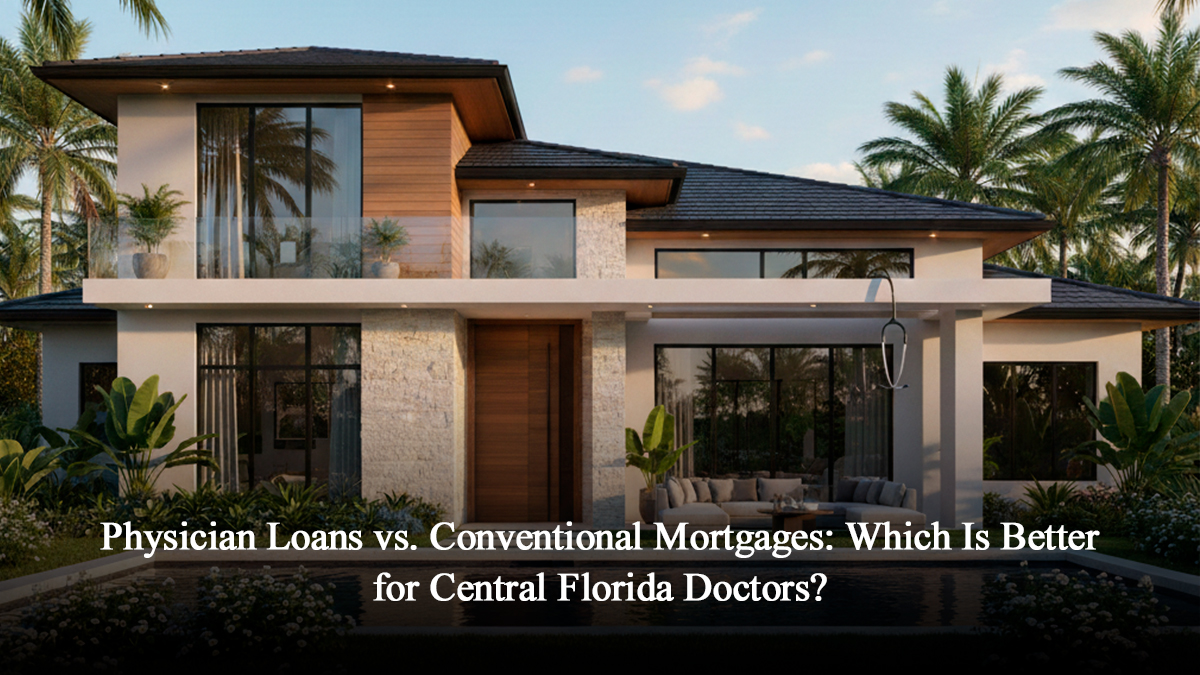
Choose a physician loan if you need low or no down payment, no PMI, and flexible student debt treatment. Choose a conventional mortgage if you have 20 percent down and want the lowest long term cost.
Why This Matters Right Now
You are entering a Central Florida real estate market that has shifted into a balanced zone. Local MLS trends show 4.5 to 5 months of supply, average days on market around 27 to 37, and price growth near 2 to 4 percent year over year. Inventory remains elevated compared with recent years, which gives you better negotiating power on price, credits, and timing. Mortgage rates have hovered near the mid-6s, with modest improvement expected into early 2026. That matters because your financing choice directly affects your monthly payment, cash out of pocket, and offer strength. If you are aligning a start date, juggling student loans, or aiming for top school zones near Orlando Health and AdventHealth, your loan type can be the difference between landing the right home and settling. You will want a financing plan that matches your job timeline, commute, budget, and long term goals.
What You Need to Know Before You Choose a Loan
You have two strong paths: a physician loan or a conventional mortgage. Each fits a different financial profile and timeline.
- Physician loans typically offer 0 to 5 percent down, no PMI, and loan-to-value up to 90 to 100 percent. Many programs allow closings up to 60 to 90 days before your start date with a signed contract. Deferred student loans can be excluded from debt-to-income if deferral meets program rules. DTI caps can run higher than conventional, often 50 to 55 percent with strong credit.
- Conventional mortgages offer competitive rates, but you will need 20 percent down to avoid PMI. With 3 to 10 percent down, PMI applies and DTI is usually capped near 43 to 45 percent. All liabilities, including student debt, are counted unless you document an acceptable payment calculation under agency guidelines.
- In Central Florida real estate, physician loans can open doors in higher-priced areas like Lake Nona, Winter Park, and Windermere when you have limited cash but strong earning potential. Conventional mortgages can be better if you have 20 percent down and prioritize the absolute lowest long term cost.
- Payment differences are not only about rate. You should compare cash due at closing, PMI cost, and how quickly you plan to refinance or pay down principal.
Loan Limits and Eligibility in Central Florida
You can usually find physician loan limits ranging from the high six figures to several million dollars depending on lender and down payment. Many programs include MD, DO, dentists, and often residents and fellows. Conventional conforming loans follow FHFA limits, and jumbo options vary by lender. You should confirm eligibility, minimum credit scores, and documentation requirements early so your pre-approval aligns with your target price point in orlando florida.
How to Compare Your Options
You will make the best choice by comparing total cost, not just the headline interest rate. Rate, down payment, PMI, and time horizon all matter. Here is how to size it up.
- Scenario A, 600,000 purchase:
– Physician loan at 0 percent down, 30-year fixed near mid-6s, no PMI. Estimated principal and interest around 3,800 to 3,900 per month. – Conventional at 10 percent down, same rate range, PMI roughly 0.4 to 0.6 percent of the loan per year. With a 540,000 loan, principal and interest around 3,400 plus about 200 to 300 PMI, total near 3,600 to 3,700. You would bring about 60,000 plus closing costs. – Conventional at 20 percent down removes PMI and can drop the monthly to roughly 3,000 to 3,100, but you would bring about 120,000 plus closing costs.
- Scenario B, 1,000,000 purchase:
– Physician loan at 5 percent down can preserve 50,000 to 150,000 in liquidity for moving, furnishing, and reserves. Your monthly may be higher than a 20 percent down conventional jumbo, but you keep capital for emergencies and investing. – Conventional jumbo at 20 percent down often delivers the lowest monthly cost if you have the cash.
Your best option depends on cash on hand, start date, and how long you will hold the home. If you plan to refinance within 24 to 36 months as your income climbs, a physician loan’s cash preservation can outweigh a slightly higher rate.
Key factors to evaluate:
- Cash to close: Down payment, closing costs, and reserve requirements, especially important for first home buyer doctors.
- Monthly cost: Rate, PMI, and insurance plus taxes by county, not just principal and interest.
- Time horizon: Short stay favors liquidity and flexibility. Long hold favors the lowest total cost.
Your Step-by-Step Guide to Pre-Approval
You can streamline your path by getting fully pre-approved before you tour homes. Follow these steps to stay ahead of the market.
1) Confirm eligibility. Ask lenders about physician loan programs for MD, DO, DDS, DMD, and residents or fellows. Verify maximum loan amounts, down payment options, and accepted property types, including condos and townhomes.
2) Gather documents. You will need a signed employment contract or offer letter, medical license or proof of licensure path, residency or fellowship documentation if applicable, two years of address and identity history, and recent pay stubs if already employed.
3) Address student loans. If loans are deferred, confirm how they are treated. Physician loan underwriting may exclude deferred loans that meet program timelines. Conventional lenders will calculate a qualifying payment even during deferment.
4) Complete the application. Provide consent for a credit pull and upload asset statements. Aim for a 720 or higher score for top tier pricing. If credit is borderline, ask about rapid rescore options and small-balance paydowns that move you into a better pricing tier.
5) Underwriting review. For physician loans, expect overlays that allow high LTV and flexible DTI. Respond quickly to conditions to protect your timeline.
6) Receive your pre-approval letter. Most letters are valid 60 to 90 days. Update your file if your start date shifts or your price target changes.
7) Align contract timing. If you need to close before your start date, pad at least 30 to 45 days for underwriting, appraisal, and title. Ask your agent to include financing and employment contingencies that reflect your situation.
What This Looks Like in Winter Garden and Greater Orlando
You are shopping in a corridor where hospital access, schools, and lifestyle amenities shape demand. Inventory has risen since 2023, and median prices across the metro hover around the high 300s to low 400s, with tighter submarkets running higher. Days on market average just under five weeks, which gives you enough time to secure inspections and appraisals without rushing, yet you still need a strong pre-approval to win.
Near Bowery Drive in Winter Garden, you will find master-planned communities with modern amenities, top-rated schools, and easy access to FL-429 and FL-408. If your schedule spans AdventHealth Winter Garden, Orlando Health, or Lake Nona’s Medical City, you can target a 20 to 35 minute commute by picking the right village or town center. As mortgage rates drift in the mid-6s, you can negotiate seller credits in many segments, which you can use to buy points or cover closing costs, especially useful with physician loans.
Neighborhoods to consider:
- Horizon West and Hamlin, Winter Garden: Newer construction, A-rated schools, wellness amenities, and quick access to FL-429. Typical prices range from the mid-400s for townhomes to 900,000-plus for larger single-family homes. Great fit for first home buyer physicians.
- Lake Nona, Medical City: Proximity to hospitals, research institutes, and top-tier recreational facilities. Expect mid-500s for smaller homes and townhomes and 1 million plus for luxury real estate. Strong appreciation drivers and short commutes.
- Windermere and Dr. Phillips: Established luxury homes in Central Florida with lakefront options, golf, and upscale dining. Pricing often runs 650,000 to multi-million. Ideal if you value prestige zip codes and quick access to major arterials.
What Most People Get Wrong
You may hear that physician loans always cost more. That is not always true. The rate can be similar to conventional, and the no-PMI structure can save hundreds per month at higher LTVs. You might also hear you must wait to close until you start work. Many physician programs allow you to close up to 90 days before day one with a signed contract.
Another myth is that no PMI means no mortgage insurance cost at all. While there is no monthly PMI, some physician loans price the risk into the rate. That is still a win if you need to preserve cash or you plan to refinance once income rises. Finally, do not assume condos are off limits. Many programs do allow condos and townhomes, but building approvals matter. You should verify project eligibility early, especially around orlando florida hotspots where investor ratios can be high and rules are stricter.
Frequently Asked Questions
Can you close on a home before your residency or job start date?
Yes. Many physician loan programs allow you to close 60 to 90 days before your start date with a signed employment contract. You should provide your license path and any HR onboarding details. Build a 45-day buffer for underwriting, appraisal, and title.
Do physician loans include condos and townhomes in Central Florida?
Often yes, but you should confirm the building’s eligibility and the association’s financials. Lenders review budget reserves, owner-occupancy ratios, and litigation risk. In markets like Lake Nona and Winter Garden, newer projects usually pass, but you should verify early.
How are student loans counted for qualification?
Physician loans may exclude deferred student loan payments if deferral meets program rules. Conventional underwriting usually assigns a payment even in deferment, often a percentage of the balance if no payment is reported. You should ask lenders to show both calculations so you can compare.
Which loan is better if you have 20 percent down?
Conventional is usually better with 20 percent down because you avoid PMI and often get the lowest total long term cost. If you value liquidity more than rate, you could still compare a physician loan, but conventional tends to win in this scenario.
What if you plan to upgrade in two to three years?
You should prioritize liquidity and flexibility. A physician loan can be smart if you plan to refinance as income rises or move for a new attending role. If you are certain you will stay long term, conventional with more money down may deliver lower lifetime cost.
Conclusion
You should pick a physician loan if you want to minimize cash to close, eliminate PMI, and keep student loans from blocking your approval. You should pick a conventional mortgage if you have at least 20 percent down and want the lowest long term cost with broad property options. In a balanced Central Florida market with more inventory, your financing strength will decide how competitive your offer is, how much you pay each month, and whether you preserve cash for reserves and investing. When you compare your options, measure total cost, not just the rate, and match the loan to your timeline, commute, and family needs.
If you’re ready to explore your options for physician loans vs. conventional mortgages in Winter Garden and greater orlando florida, Angela Rodriguez at Dream Finders Realty Group can walk you through the specifics for your situation.
 4078738379
You can also discuss neighborhood strategies tailored for Real estate investor doctors and Investor doctors seeking rental potential, as well as purchase plans for luxury real estate and Luxury homes in Central Florida.